

Joka Room casino Plinko game
Introduction
When I look at Joka room casino Plinko, I see a format that appears almost too simple to hold attention for long. A ball drops from the top of a board, bounces off pins, and lands in a payout slot at the bottom. That is the entire visual premise. Yet in practice, Plinko has become one of the most discussed real-money games guide for Joka Room Casino accounts of recent years because the experience is driven less by visual complexity and more by tension, pace, and variance.
For Australian players browsing Joka room casino, Plinko stands out for a clear reason: it removes a lot of the decorative layers that come with classic slots and leaves the player face to face with probability. There are no reels to interpret, no paylines to track, and no bonus round narrative to follow. Instead, every round is a direct encounter with randomness, stake sizing, and risk selection. That stripped-back structure is precisely why the game attracts attention. It looks accessible on the surface, but the actual session feel can change dramatically depending on how the player sets the risk level and board layout.
In this article, I will break down what Plinko really is, how the mechanics work at Joka room casino, what the pace feels like during live play, where the main strengths and limitations sit, and what a player should understand before deciding whether this format is worth their time. My goal is not to oversell the game. It is to explain what Plinko genuinely offers and what it does not.
What Plinko is and why players keep returning to it
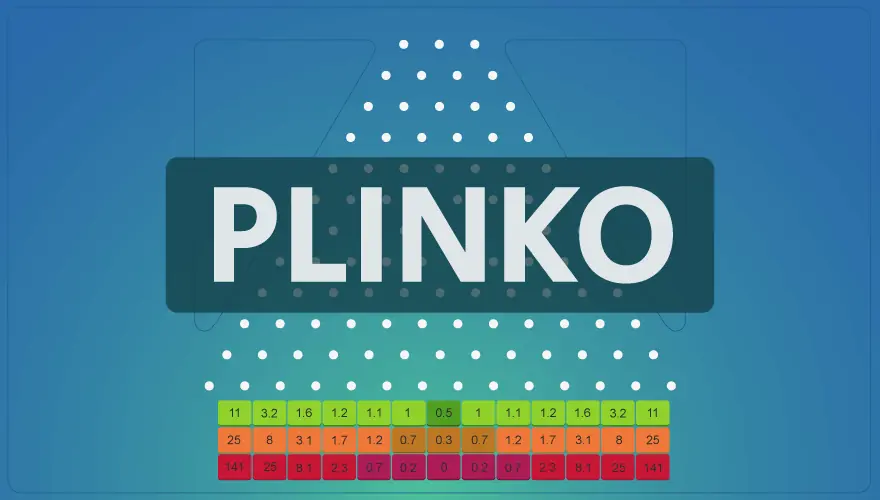
Plinko is a chance-based casino game built around a vertical peg board. The player chooses a stake, often adjusts the number of rows and a risk setting, then drops a ball from the top. As the ball hits each pin, it deflects left or right until it reaches one of several multiplier slots at the bottom. The final multiplier determines the result of that round.
That sounds basic, and it is. But the reason Plinko became so noticeable is that it turns probability into something visible. In a slot, the random number generator works behind a layer of symbols, animations, and features. In Plinko, the route is right there on the screen. Even though the path is still governed by random outcomes, the player watches the ball bounce step by step, and that creates a different emotional response. The round feels transparent, even if the mathematics behind it remain just as unforgiving as in other casino products.
At Joka room casino, this matters because players often want games that are easy to understand without being mechanically empty. Plinko meets that demand. It takes only a few seconds to grasp the rules, but the session does not feel flat because each change in settings alters the rhythm and expected result distribution. A low-risk board can produce many small returns and long stretches of manageable swings. A high-risk board can create a completely different experience, where many drops return little or nothing and a rare high multiplier becomes the main reason to continue.
One of the most interesting things about Plinko is that it gives players the illusion of calm while quietly building tension. The interface is clean, the action is repetitive, and the round structure is short. But once real money is involved, every bounce becomes a small suspense event. That contrast is a big part of the game’s appeal.
How the core Plinko system works in a real session
To understand Joka room casino Plinko, it helps to separate the visual layer from the underlying logic. Visually, the player sees a ball falling through a field of pins. Logically, the game is a multiplier distribution model. The board is designed so that central landing zones are usually more common, while the outer edge multipliers are less likely to be hit. This is the foundation of the entire product. For a closer look at the games library, crash games details sorts the titles by theme and pace.
In most Plinko versions, the player can control several variables:
- Bet size — the amount risked on each drop.
- Risk level — often low, medium, or high, which changes how the multiplier table is distributed.
- Rows — the height of the board, affecting the number of deflections and the spread of possible outcomes.
- Auto-play or manual drops — a pacing tool that can speed up or slow down the session.
The ball’s movement looks organic, but from the player’s perspective the key point is simpler: more rows generally mean more route variation, and higher risk settings usually shift more value toward rare top multipliers while making low-end outcomes more common. That is why two Plinko sessions can feel like entirely different products even when the board looks nearly identical.
Here is a practical summary of how the main settings typically affect play:
| Setting | What changes on screen | What it means in practice |
|---|---|---|
| Low risk | More balanced multiplier spread | Smaller swings, more frequent modest returns, longer sessions possible |
| Medium risk | Wider difference between common and stronger outcomes | Noticeable variance, mixed rhythm, occasional meaningful spikes |
| High risk | Extreme top-end multipliers on outer slots | Many weak results, sharp bankroll pressure, rare but dramatic hits |
| Fewer rows | Shorter ball path | Quicker rounds, narrower emotional build-up, simpler session flow |
| More rows | Longer bounce sequence | More suspense, broader result spread, stronger feeling of randomness |
One detail players often underestimate is how much the risk setting shapes the whole experience. It does not simply make the game “safer” or “more dangerous” in a vague sense. It changes the profile of expected outcomes. On a lower setting, the board tends to absorb variance by clustering results closer to the center. On a higher setting, the game becomes more binary in feel: long sequences of disappointing drops can be interrupted by a single large multiplier that changes the session ledger.
Why the game feels engaging despite its minimal design
Plinko keeps attention not because there is a lot happening, but because the player can read every moment of uncertainty. In a slot, the suspense usually arrives at the end of a spin when the reels stop. In Plinko, suspense unfolds during the round itself. Every pin collision extends the uncertainty by a fraction of a second. That creates a surprisingly effective rhythm.
At Joka room casino, this rhythm is one of the strongest reasons players try Plinko and continue playing it. The game gives immediate feedback. There is no need to wait through long feature intros or bonus transitions. You place a stake, drop the ball, and get a result. Then you decide whether to repeat, raise the stake, reduce the risk, or stop. That loop is efficient, and for many players efficiency is part of the attraction.
There is also a psychological factor worth noting. Because the ball visibly travels left and right, players often feel more connected to the outcome than they do in other quick-result formats. The route looks almost interpretable, as if a near miss on a high multiplier meant something. In mathematical terms, it usually does not. But in user experience terms, it matters a lot. Plinko gives randomness a shape, and that makes each result feel more personal than a simple number reveal.
One of my recurring observations with Plinko is this: the game often feels slower emotionally than it is technically. A single drop can take only a moment, yet the visual path stretches that moment enough to create anticipation. That is a clever design choice. It makes a short round feel eventful without requiring a heavy interface.
Risk, probability, and who should approach Plinko carefully
Plinko is simple to launch, but it should not be mistaken for a low-pressure format by default. The actual pressure comes from variance. Depending on the chosen setup, the game can move from relatively steady to highly aggressive very quickly. That is why understanding probability matters before the first real-money drop.
The broad rule is straightforward: the most attractive multipliers are usually the least likely to land. Those edge slots are what create the game’s headline moments, but they are not representative of average session flow. Most rounds tend to resolve in the more common lower or mid-range multipliers. A player who enters Plinko expecting frequent large returns is likely to misread the format from the start.
This is especially important on high-risk settings. The board may advertise very large top-end numbers, but those numbers exist partly because many other outcomes are weak. In plain terms, the rare big hit is funded by a large volume of ordinary or losing drops. That does not make the game unfair; it makes it structurally volatile.
I would describe the suitability of Plinko this way:
- It suits players who enjoy quick rounds and visible randomness. If you like seeing the result unfold rather than simply appear, Plinko has real appeal.
- It suits players who are comfortable with variance. Even moderate settings can produce uneven sequences.
- It may not suit players who want layered content. If you prefer free spins, narrative features, or symbol-based depth, Plinko can feel too bare.
- It may not suit players who chase patterns. The board can tempt people into reading meaning into routes and streaks that are not predictive.
A useful reality check is this: Plinko is not a strategy game in the traditional sense. There are choices around stake size and setup, but there is no reliable method to control the ball’s final destination. You can shape the volatility profile of the session. You cannot engineer outcomes.
What players should know about session rhythm and likely result patterns
One of the best ways to judge Joka room casino Plinko is to stop thinking in terms of isolated drops and start thinking in terms of session texture. This game is built on sequences. A single round tells you very little. Ten rounds tell you more about pace. Fifty rounds reveal whether your chosen setup matches your bankroll tolerance and patience level.
On low-risk settings, the session often feels smoother because the board produces more modest returns that partly cushion losing rounds. That does not eliminate losses, but it can reduce the emotional sharpness of the swings. On high-risk settings, the opposite is common. The session may feel flat for long stretches, then suddenly spike. Some players love that shape because it creates the possibility of a standout moment. Others find it draining because the waiting period between strong results can be expensive.
Another point worth understanding is that Plinko can encourage over-speeding. Since rounds are short and inputs are minimal, it is easy to increase the number of drops without noticing how quickly the stake total adds up. This is one of the game’s less discussed pressure points. The board looks harmless, but session cost can escalate fast when auto-play is running or when the player starts adjusting stakes after a cold run.
| Session element | What players often expect | What often happens in reality |
|---|---|---|
| Low risk mode | Consistent profit flow | More stable pacing, but still many neutral or losing rounds |
| High risk mode | Regular access to big multipliers | Long dry spells are common, with rare standout returns |
| Auto-play | Convenience only | Convenience plus reduced awareness of spending speed |
| Visible ball path | Clues about future outcomes | Strong emotional engagement, but no predictive value |
A memorable observation here is that Plinko often punishes impatience more than misunderstanding. Most players understand the rules quickly. The real issue comes later, when they respond emotionally to short-term sequences. The board’s simplicity can make people feel more in control than they really are.
How Plinko differs from slots and other casino favourites
The easiest comparison is with online slots, because that is where many players arrive from. The difference is not just visual. It is structural.
Slots usually package randomness inside a broader entertainment system: reels, symbols, paylines, scatter triggers, compare free spins options at Joka Room Casino, modifiers, and sometimes bonus buys. Plinko strips almost all of that away. It reduces the experience to stake, drop, path, and multiplier. For some players, that is refreshing. For others, it removes too much texture.
Compared with roulette, Plinko shares the appeal of fast rounds and straightforward outcomes, but the emotional delivery is different. Roulette gives a clean result at the end of a spin. Plinko stretches the reveal across the ball’s descent. Compared with crash-style games, Plinko also feels less confrontational. Crash asks the player to decide when to cash out before the line collapses. Plinko asks for fewer timing decisions and places more focus on setup selection before the round begins.
What makes Plinko distinct is that it sits between passive and active play. It is not as passive as pressing spin on a slot with fixed rules, because the player can choose risk level and board depth. But it is not truly skill-driven either. That middle ground is why the format has found such a wide audience.
If I had to summarise the practical difference in one sentence, it would be this: slots entertain through layered content, while Plinko entertains through concentrated uncertainty.
Practical strengths and weak points of the format
Plinko has clear advantages, but they are only advantages if they match what the player actually wants from a casino session. I think that distinction matters more than broad claims about whether the game is “good” or “bad.”
Main strengths:
- Immediate clarity. The rules are easy to understand within minutes, which lowers the barrier to entry.
- Fast session control. Players can adjust stake size, pace, and risk profile without learning a complicated interface.
- Strong tension per round. The visible path creates suspense out of a very short event.
- Flexible volatility profile. Different settings can produce noticeably different experiences.
Main limitations:
- Limited depth beyond probability management. If you want evolving features, Plinko may feel repetitive.
- High temptation to overplay. Short rounds can make spending speed easy to underestimate.
- Misleading simplicity. The clean layout can make the game look gentler than it is.
- Emotional overreaction risk. Near-edge bounces and streaks can encourage false pattern thinking.
The most important weak point, in my view, is that Plinko can become monotonous for players who need variety within the game itself. The excitement comes from outcome distribution, not from changing content. If the suspense of the falling ball is not enough for you, the format can lose its appeal quickly.
At the same time, one of its strongest qualities is honesty of design. Plinko does not pretend to be deeper than it is. At Joka room casino, that can be a plus for players who prefer direct, readable casino formats over heavily animated reel games.
What to check before launching Joka room casino Plinko
Before starting a session, I would focus on a few practical points rather than jumping straight into repeated drops. These checks can make a real difference to how the game feels and how manageable the session remains.
First, look at the risk setting and understand what it implies. Do not choose high risk simply because the top multiplier is eye-catching. Ask whether your bankroll can handle long stretches of weak outcomes. If the answer is no, a lower setting is the more rational starting point.
Second, pay attention to bet size relative to session length. Because Plinko rounds are quick, even a modest stake can add up fast over dozens of drops. A bet that feels small in isolation may be too large for the pace of the format.
Third, use demo mode if it is available. This is not just for beginners. Demo play helps reveal whether you actually enjoy the rhythm of the board and whether your preferred settings match your expectations. It is better to discover in free play that high-risk Plinko feels too uneven for your taste than to learn that after a rushed real-money session.
Fourth, decide in advance what kind of experience you want. If you want a calm, extended session, choose settings that support that. If you want a high-variance shot at a rare multiplier, recognise that the cost of that excitement may be a long run of disappointing returns. The point is not to eliminate uncertainty. The point is to choose the type of uncertainty you are willing to sit with.
A final note on branding: whether the page refers to Joka room casino or occasionally uses the alternative spelling Jokaroom casino, the key evaluation should stay on the game itself. The real question is not whether the name looks familiar. It is whether the Plinko configuration on offer matches your preferred style of play.
Final verdict on Joka room casino Plinko
Joka room casino Plinko offers a very specific kind of casino experience: fast rounds, visible randomness, adjustable variance, and a direct connection between setup choices and session feel. That is the core of its appeal. It does not rely on reels, storylines, or bonus theatrics. Instead, it turns a falling ball into a compact test of patience, bankroll discipline, and comfort with uncertainty.
Its strongest qualities are clarity, pace, and the way it makes probability feel tangible. Its weak points are just as real: repetition can set in, high-risk settings can burn through a balance quickly, and the simplicity of the interface can hide how sharp the swings may become. This is not a format I would recommend blindly to every player. It suits those who enjoy clean design, quick decision cycles, and outcome-driven tension. It is less suitable for players who want richer in-game variety or who dislike long uneven stretches between stronger returns.
If you are considering Plinko at Joka room casino, the sensible approach is to treat it as a focused variance game rather than a casual visual toy. Start with realistic stakes, understand what the risk setting changes, and judge the experience over a sequence of rounds rather than one lucky or unlucky drop. For the right player, Plinko is compelling because it is stripped back and honest. For the wrong player, that same simplicity can feel repetitive or too exposed. That is exactly why it deserves a careful look before you commit to it.
FAQ
What happens when the ball is dropped in Joka Room Plinko?
The game board releases a ball from the selected drop point, and it bounces through pegs before landing in a result slot. Each slot corresponds to a multiplier that applies to the placed bet. The outcome shows instantly after the ball settles.
How does a player choose the risk level and volatility in Plinko?
Risk level and volatility are typically reflected through the available multipliers and how frequently lower or higher results appear. Higher-risk layouts can include more extreme multipliers. The exact setup depends on the current Plinko mode shown in the lobby.
Which account conditions must be met before starting real-money Plinko play?
Real-money play requires an active account status and access to the online casino section. If there is a pending verification or account hold, game launch may be blocked until it is resolved.